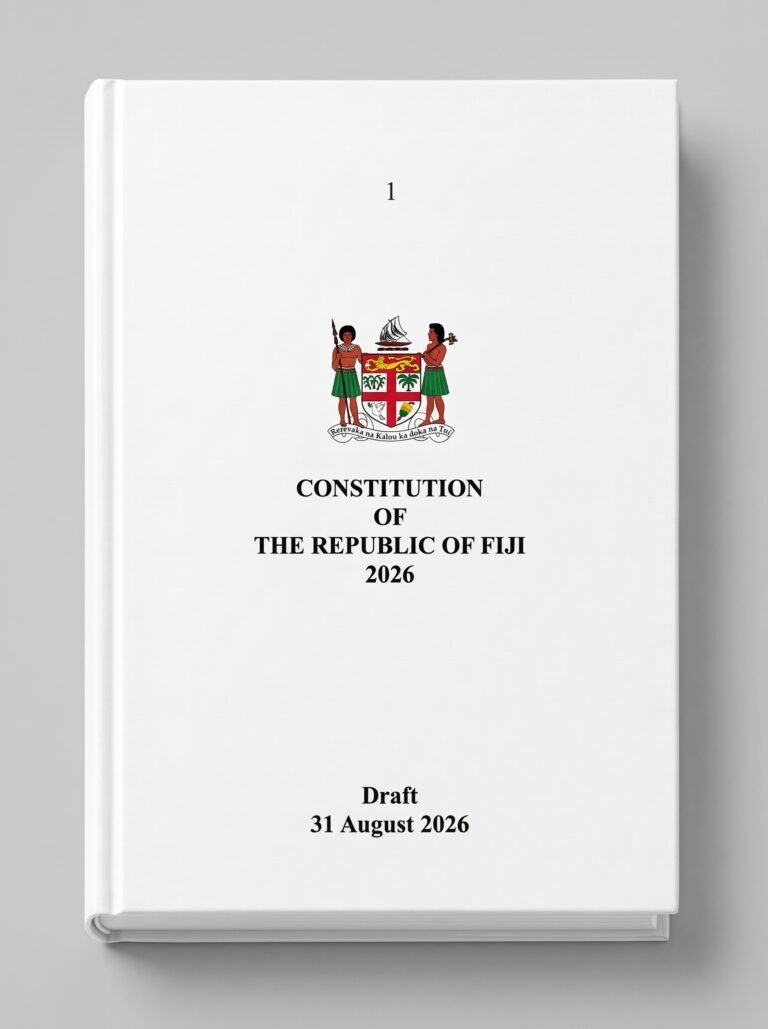
CDD Chief Executive Officer Nilesh Lal said that, in many respects, the 2026 draft Constitution is a major improvement on the 2013 Constitution in doing what a constitution is fundamentally meant to do: protect the ruled from the ruler.
“The 2013 Constitution gave enormous power to whoever commanded a simple majority in Parliament. In many respects, it gave the government of the day very few meaningful constitutional restraints. The 2026 draft changes that quite significantly by placing clearer limits on executive power, strengthening independent institutions and improving the protection of rights and freedoms,” Mr Lal said.
He said the draft also incorporates several progressive and highly desirable features from the Ghai draft, including a two-term limit for the Prime Minister and a constitutional cap on Cabinet size.
“It also creates a more independent appointments architecture for constitutional and independent State institutions, strengthens the Public Service Commission, provides a clearer and stronger test for limiting rights, strengthens judicial independence, mandates caretaker conventions, and places greater restrictions on the use of expedited legislation.”
Mr Lal said these reforms are important because constitutional democracy is not simply about who wins an election and forms government.
“It is also about placing limits on the power of those who govern, ensuring that independent institutions are genuinely independent, and protecting ordinary citizens from the arbitrary or excessive use of State power.”
Mr Lal said CDD is particularly encouraged that the draft reflects a very large proportion of the proposals made by Dialogue Fiji to the Constitution Review Commission.
“Dialogue Fiji made 22 substantive proposals in its submission, and our preliminary assessment is that around 17 of them, almost 80 per cent, are reflected in the draft Constitution.”
“Most of our proposals were aimed at addressing the disproportionate concentration of executive power under the 2013 Constitution, strengthening institutional independence, removing excessive limitations on rights, and improving democratic accountability.”
Mr Lal said that Dialogue Fiji proposals reflected in the draft include depoliticising constitutional appointments, strengthening the independence of the Public Service Commission, capping Cabinet at 15 members, limiting a Prime Minister to two terms, strengthening the Bill of Rights and the test for limiting rights, strengthening access to information, strengthening judicial independence, constitutionally entrenching the Public Accounts Committee with an Opposition chair, retaining the four-year parliamentary term, restricting the use of expedited legislation, retaining secularism and equal citizenship, and strengthening constitutional recognition of local government.
“These are significant reforms, and many of them address weaknesses in the 2013 Constitution that we have raised consistently over the years.”
“CDD has also identified a number of serious regressions and problematic provisions in the draft, which we will address in our full assessment. But it is equally important to acknowledge that, in many important respects, the draft introduces stronger constitutional safeguards, better institutional checks and greater protection for the rights and freedoms of ordinary Fijians.”