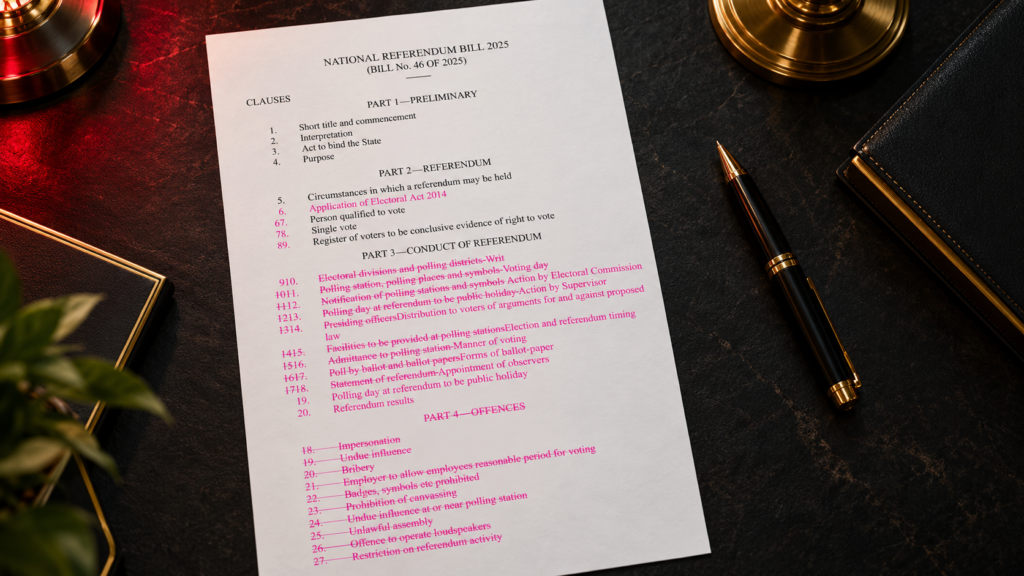
The Centre for Democracy & Dialogue (CDD) says the revised National Referendum Bill remains seriously deficient as the legal framework through which Fiji may be asked to approve major constitutional change.
The Bill was first introduced in December 2025 and faced widespread backlash because of extraordinary provisions restricting referendum campaigning and public participation. The Standing Committee on Justice, Law and Human Rights has since removed some of the worst provisions. But the revised Bill remains deeply problematic.
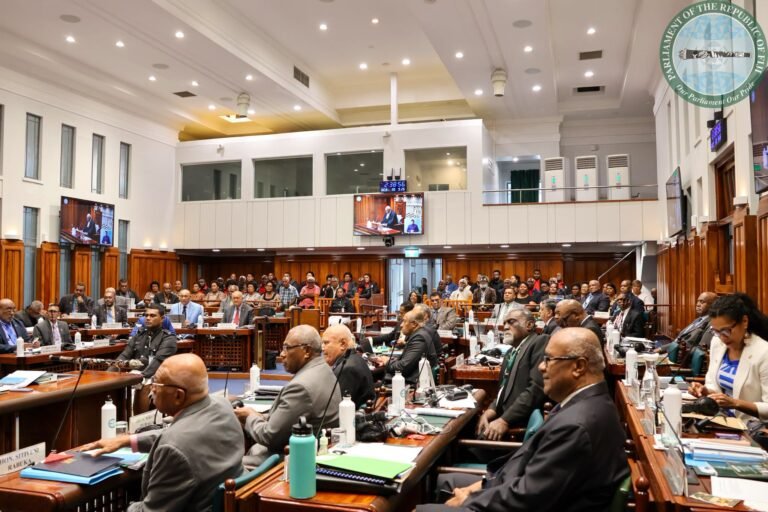
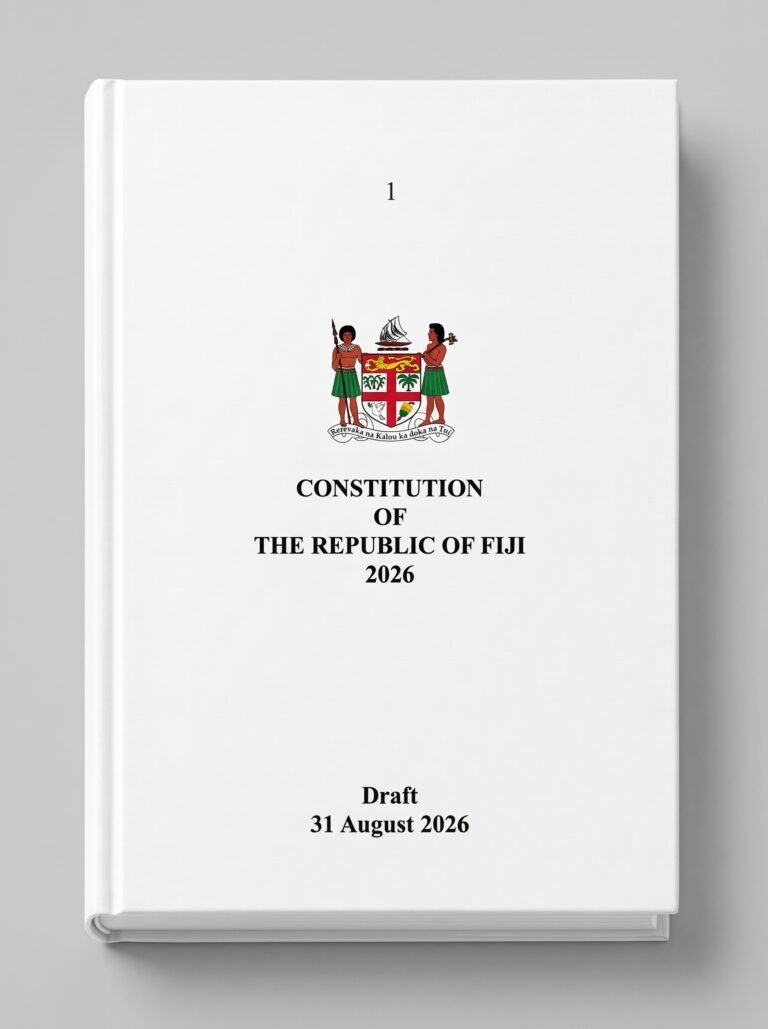
What makes this especially concerning is the sequence now unfolding. The Constitution Amendment Bill is being introduced on Wednesday, 30 September. The Referendum Bill is scheduled for consideration the following day, Thursday, 1 October. The Constitution Amendment Bill then returns for its second reading (and first voting) on Friday, 2 October.
The Government has already announced further consideration of the constitutional amendments in November and a referendum between November and mid-December. The Referendum Bill is therefore being enacted in the middle of the very constitutional amendment process for which it is intended to be used.
This is not a referendum framework being established for some distant future. The rules are being put in place immediately before they are expected to be used to secure approval for major constitutional change.
That is particularly troubling given the Government’s repeated criticism of the democratic deficit surrounding the adoption of the 2013 Constitution. If that criticism was based on democratic principle, then the process used to replace or substantially amend the 2013 Constitution must clearly meet a higher standard. At present, it does not.
The referendum can be completed within 30 to 45 days
Clause 11 requires polling to take place:
“not less than 30 days and not more than 45 days after the issue of the writ.”
That means Fijians could be asked to understand, debate and decide upon sweeping constitutional changes within a maximum of 45 days. There is no ability for the Electoral Commission to determine that a complex constitutional proposal requires a longer period for public education and deliberation.
The Electoral Commission can suspend debates, meetings and publication
Clause 15(2) is even more alarming. Where an election and referendum occur on different dates, the Electoral Commission may suspend “all campaigning” relating to the later event.
The Bill expressly says this can include:
“opinion polls, public forums and meetings, interviews, panel discussions, debates, and the publishing of information”.
A breach becomes an illegal electoral practice. A law governing a constitutional referendum should protect public discussion, not create a power capable of shutting down debates, forums, interviews and the publication of information during an already compressed referendum period.
The referendum question does not even have to be neutral
The Bill allows the writ to determine the question or questions put to voters, but contains no requirement that those questions be neutral, unbiased, non-leading or non-misleading. For a referendum capable of changing Fiji’s supreme law, that is a serious omission.
The supposed “arguments for and against” provision does not actually provide balanced arguments
Clause 14 is headed “Distribution to voters of arguments for and against proposed law”. But it only requires a summary of the parliamentary debate and the proposed textual amendments to be published in at least two newspapers no later than 15 days before polling.
It does not guarantee voters balanced Yes and No arguments, an independent explanation of the changes, or a clear account of the consequences of approving or rejecting them.
Fundamental rules are still left to be written later
The Bill leaves major matters to regulations, including voter education, public meetings, debates, opinion polling, campaign finance and referendum challenges. These are fundamental parts of the democratic framework governing the referendum.
CDD Chief Executive Officer Nilesh Lal said the process now risks reproducing the very legitimacy problem the constitutional review was supposed to address.
“The democratic deficit of the 2013 Constitution has been repeatedly invoked as a reason for constitutional reform. But you cannot remedy one democratic deficit by creating another.”
“The Referendum Bill is being advanced one day after the Constitution Amendment Bill is introduced. It allows a constitutional referendum within 30 to 45 days, permits the suspension of debates, forums, interviews and publication, does not require a neutral referendum question, and does not guarantee voters balanced information.”
“Those are not minor drafting problems. They go directly to whether the consent obtained through the referendum can credibly be described as informed and democratic.”
Mr Lal said the contradiction was particularly striking given who is now directing the constitutional process. “Those who spent years criticising the democratic deficiencies of the 2013 Constitution now have an obligation to apply the same democratic principles when they control the process.”
“If the shortcomings of 2013 were objectionable as a matter of principle, then those principles must still apply today. Otherwise, Fijians are entitled to question whether the objection was really about democratic principle or simply political expediency.”
CDD said a referendum alone does not confer democratic legitimacy on a constitutional process. If the referendum is conducted under deficient rules, on a rushed timetable, with inadequate voter information and powers capable of restricting public debate, those deficiencies will follow the Constitution that emerges from it.
Fiji should not replace the democratic deficit associated with the 2013 Constitution with another democratic deficit in 2026.