
SUVA, 3 September 2026 — The Centre for Democracy & Dialogue (CDD) has urged Parliament to seize a “golden opportunity” to substantially reform Fiji’s electoral laws, while warning that several provisions of the Electoral (Amendment) Bill 2026 could weaken important safeguards around polling.
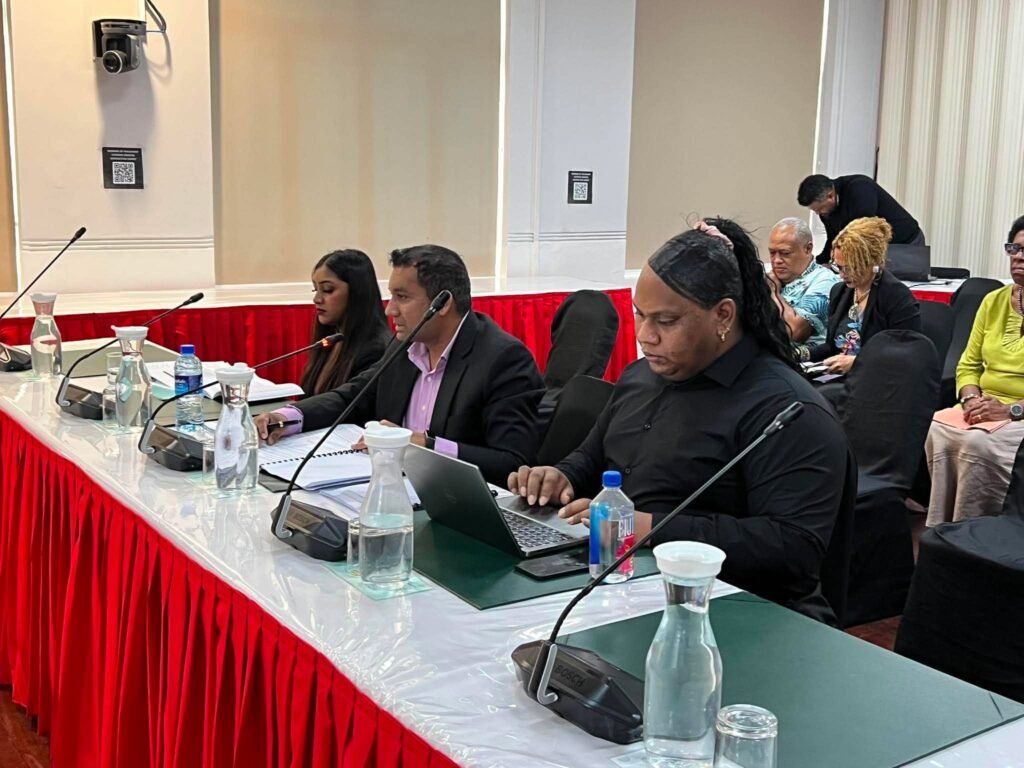
CDD made a presentation to the Parliamentary Standing Committee on Justice, Law and Human Rights earlier today.
CDD Chief Executive Officer Nilesh Lal said the Electoral Act 2014 was generally a modern and robust law under which three general elections had been successfully conducted, but contained provisions that overcriminalised electoral activity, unnecessarily restricted civil society and research, and conferred excessive powers on electoral authorities.
“We should preserve what works, remove what is unnecessarily restrictive and correct what is poorly drafted. But reform should not mean dismantling safeguards that protect voters,” Lal said.
CDD strongly opposed clause 26, which would allow political parties and candidates to provide voters with free transport and refreshments on polling day.
“Polling day should not be another campaign day. It is the voters’ day. Political parties have ample opportunity during the campaign period to canvass, organise rallies, hold carnivals, mobilise supporters and persuade voters. On election day, voters should be interacting only with election officials, not accepting transport, food or other benefits from political parties or candidates,” Lal said.
He said party-provided transport created grave risks of undue influence even without an explicit request for a vote.
“A voter can be collected from home by a party worker, transported in a party-controlled environment, have their personal details recorded, be exposed to political conversation, taken directly to vote and then provided refreshments. Influence can arise through gratitude, obligation or subtle pressure. The law should be reducing opportunities for that influence, not expressly authorising them.”
Lal said more than 2,000 polling stations operate around Fiji on election day and section 39(3) already requires polling stations, except in exceptional circumstances, to be within reasonable walking distance of voters.
“If a voter has a genuine transport need because of disability, age or geography, assistance should be provided neutrally by the election management body, not by political parties.”
CDD also opposed reducing the protected area around polling venues from 300 metres to 100 metres, and called for retention of the 48-hour campaign silence period.
“Reducing the buffer, removing the silence period and allowing party transport and hospitality together would create a much more partisan polling-day environment,” Lal said.
The organisation also warned of the risks of allowing the use of mobile phones by voters or party polling agents inside polling stations.
“A modern mobile phone is a high-resolution camera, video recorder and instant transmission device. There is no compelling reason for party polling agents to be using mobile phones inside polling stations. Ballot secrecy is fundamental and should not be exposed to avoidable risks,” Lal said.
CDD further recommended limiting postal voting for Fiji-based voters to genuine need; retaining continuous publication of provisional results; and correcting recount provisions that CDD described as unnecessarily broad and poorly drafted.
The organisation also recommended deleting clause 20, saying “party list” and “Final National Results Tally” are distinct electoral concepts; repealing section 110A governing polls and research; and repealing section 115(1) so legitimate non-partisan voter education, research, public debate and election observation are not restricted merely because an organisation receives foreign funding.
CDD supported repeal of excessive information-gathering powers and manifesto-costing offences, but recommended a three-tier offence regime separating administrative infringements from illegal and genuinely corrupt electoral practices.
It also urged Parliament to address excessive candidate deposits, transfer observer accreditation from the Minister to the Electoral Commission, narrow the seven-day opinion-poll publication ban, protect legitimate speech under section 144A, ensure equal-access safeguards for campaigning at educational institutions, and place fundamental referendum rules in primary legislation.
“Fiji does not need to start again,” Lal said. “We need an Electoral Act that is more liberal and proportionate, but equally one that keeps polling day neutral, protects ballot secrecy and leaves the voter free from inducement, pressure and unnecessary partisan contact.”
CDD’s full written submission can be accessed on the CDD website here: Electoral (Amendment) Bill 2026 – CDD Full Written Submission.