Dialogue Fiji launched two new constitutional literacy publications on 10 August 2026, aimed at helping Fijians better understand the country’s constitutional frameworks and participate more meaningfully in discussions about Fiji’s constitutional future.
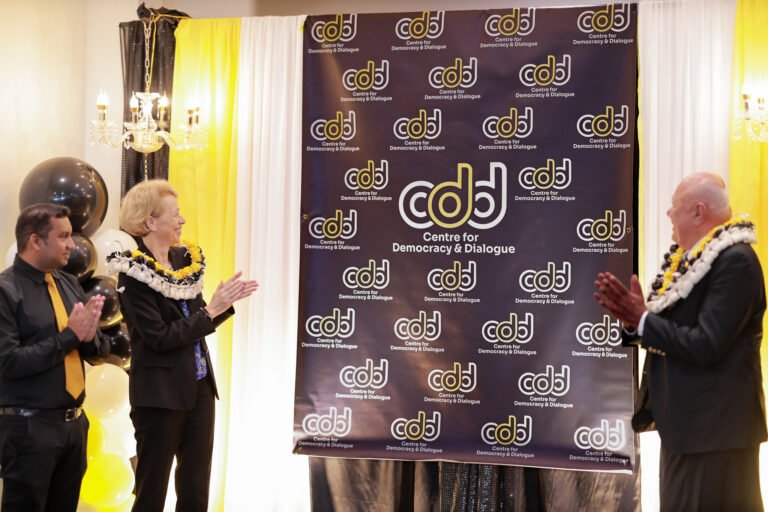
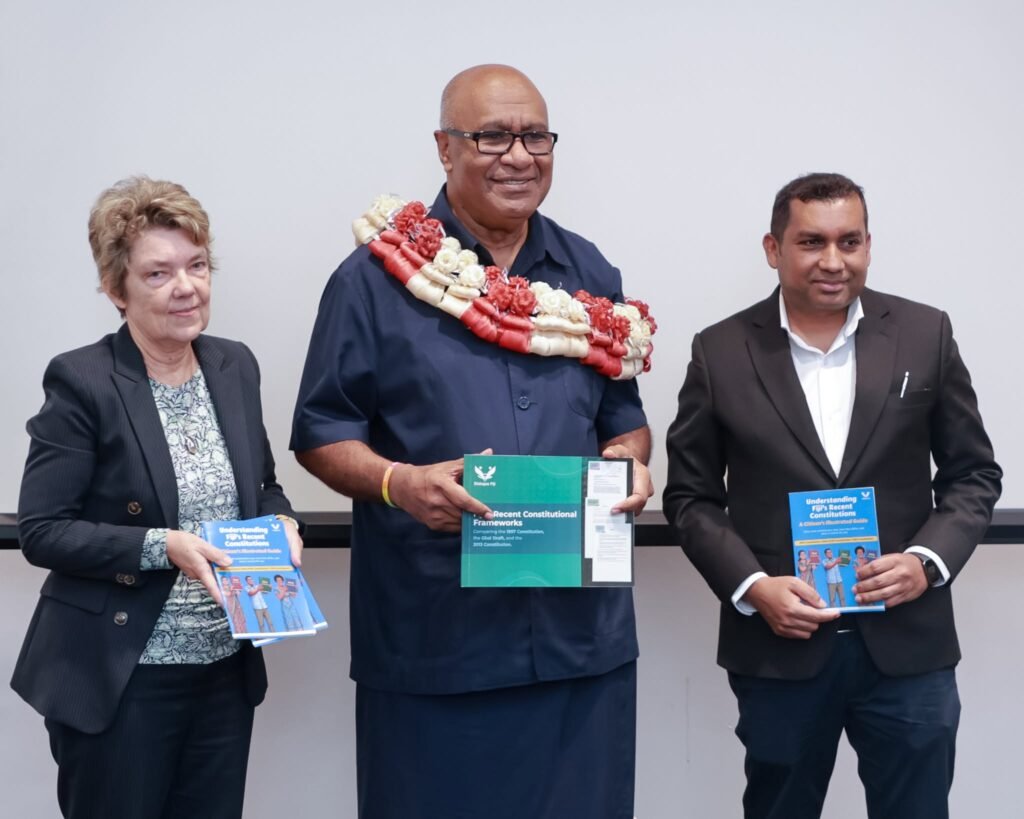
The publications were officially launched by Deputy Prime Minister Hon. Manoa Kamikamica at Tanoa Plaza Hotel in Suva.
The first publication, Fiji’s Recent Constitutional Frameworks: Comparing the 1997 Constitution, the Ghai Draft, and the 2013 Constitution, provides a detailed side-by-side comparison of the major provisions of Fiji’s three most recent constitutional frameworks.
It examines their respective approaches to the Bill of Rights, electoral systems, Parliament, executive authority, the Judiciary, state services, accountability institutions, constitutional amendment procedures and the role of the Bose Levu Vakaturaga.
The second publication, Understanding Fiji’s Recent Constitutions: A Citizen’s Illustrated Guide, presents these issues through plain language, illustrations and comparative tables, making constitutional concepts more accessible to students, teachers, journalists, civil society organisations and the wider public.
Speaking at the launch, Dialogue Fiji Executive Director Nilesh Lal said the publications were developed in response to the country’s longstanding lack of investment in constitutional literacy and civic education.
He said many Fijians were being asked to express views or make submissions on constitutional reform without first being given sufficient information about what a constitution contains, how it distributes power and how it affects their lives.
“People cannot simply be asked what kind of constitution they want without first being given the information they need to make an informed assessment,”
He noted that constitutions in Fiji had largely remained documents for lawyers, politicians and academics, often written in complex legal language and rarely explained clearly to ordinary citizens.
Mr Lal said many people held strong views about whether a particular constitution was good or bad but could not identify the specific provisions they supported or opposed. In many cases, those views were shaped more by political affiliations and the positions of political leaders than by an examination of the constitutional texts themselves.
“A constitution should not be treated like a political party manifesto, a tribal badge or a test of loyalty to one political camp. It belongs to the entire country,”
Mr Lal emphasised that the publications do not recommend the retention, amendment or replacement of any particular constitution. Instead, they allow readers to compare individual provisions and decide for themselves which arrangements they consider most appropriate for Fiji.
Launching the publications, Hon. Kamikamica said an informed citizenry was better equipped to participate constructively in national discussions and exercise democratic rights responsibly.
He commended the neutrality and restraint demonstrated in the publications, noting that they did not tell readers which constitution was best.
“That restraint is not a weakness. It is the publication’s greatest strength,”
Hon. Kamikamica said Fiji’s history demonstrated that the legitimacy of a constitution and public trust in it were closely connected to the openness and inclusiveness of the process through which it was produced or reviewed.
He said constitutional discussions should be informed by facts, conducted respectfully and guided by a shared commitment to the national interest. He also encouraged young Fijians to understand the country’s constitutional history and democratic institutions so that they could contribute meaningfully to Fiji’s future.
Associate Professor Sandra Tarte of the University of the South Pacific’s School of Law and Social Sciences also addressed the launch. She reflected on Fiji’s long and often difficult constitutional journey, noting that none of the country’s constitutions had yet fully withstood the combined tests of time, political turmoil, elections and authoritarian rule.
Associate Professor Tarte highlighted the evolution of Fiji’s constitutional arrangements, including the transition from ethnically based electoral rolls under earlier constitutions to the common roll proposed in the Ghai Draft and adopted under the 2013 Constitution. She also discussed the changing constitutional role of the Bose Levu Vakaturaga.
The publications include a foreword by Professor Steven Ratuva and were reviewed by Associate Professor Tarte. Their development was supported by Brot für die Welt.
Dialogue Fiji hopes the publications will be used in classrooms, universities, community halls, provincial meetings, professional institutions and civic education programmes across the country.
Both publications are available free of charge and may be downloaded from: