The Centre for Democracy & Dialogue (CDD) says its preliminary analysis shows that Bill No. 32 of 2026 (the “Fiji Government Draft Constitution”) is a significant downgrade from the draft Constitution proposed by the Constitution Review Commission (the “CRC Draft Constitution”).
CDD Chief Executive Officer Nilesh Lal said that while the Government draft retains some of the broad architecture of the CRC Draft Constitution, it has removed or substantially diluted many of its most important democratic and accountability safeguards.
“The greatest folly of the current (2013) Constitution is the excessive concentration of power in the Executive. The Fiji Government Draft Constitution fails to meaningfully remedy this. On the contrary, in some respects, it further reinforces the power of the Executive,” Mr Lal said.
“Some of the most laudable elements of the CRC Draft Constitution, which would have provided significant democratic and accountability safeguards, have all been removed. These include the limit on the Prime Minister’s tenure, the limit on Cabinet size, greater independence in constitutional appointments, restraints on executive power, constitutional regulation of political parties and political finance, stronger guarantees for women’s representation, constitutional recognition of local government, independent implementation oversight and important institutional accountability mechanisms.”
The CRC Draft Constitution limited Cabinet to the Prime Minister and up to 14 Ministers and prohibited a person from serving as Prime Minister more than twice. The Government draft removes the Prime Ministerial term limit and, under section 110, allows the Prime Minister to determine the number of Ministers.
Mr Lal said perhaps the clearest illustration was the Constitutional Offices Commission.
“The CRC Draft Constitution placed appointments to independent constitutional institutions at substantially greater distance from day-to-day political control. The Fiji Government Draft Constitution reverses much of that architecture. Section 179 makes the serving Prime Minister chair of the Constitutional Offices Commission, alongside the Attorney-General, and gives the Prime Minister influence over the appointment of two further members, meaning that the Government has a decisive 4:2 majority over the Opposition in the COC. This is essentially the 2013 Constitution section 132 model.”
The CRC had instead proposed a five-member COC appointed through an independent appointments committee that would have removed politicians and political appointees from the appointments body, drastically improving the independence of constitutional institutions. The COC decides on appointments including the Electoral Commission, Supervisor of Elections, Public Service Commission, Police Commissioner, Corrections Commissioner, RFMF Commander, Auditor-General, Reserve Bank Governor and Ombudsman.
“That is a structural shift in who controls the appointment gateway, rather than merely a drafting adjustment.”
Mr Lal said the same regression was evident in political-party and campaign-finance regulation.
“The CRC considered these matters sufficiently important to dedicate four constitutional provisions to political parties, political finance and campaigning. The Fiji Government Draft Constitution removes them and leaves party requirements to ordinary law. That makes these rules easier for a future parliamentary majority to manipulate later to suit its convenience or political agenda.”
The CRC provisions included requirements relating to donations, disclosure, political-party conduct and access to State-owned media.
CDD said the Bill of Rights in the Fiji Government Draft Constitution generally provides stronger protections than the current Constitution, but described the express constitutional permission for physical punishment of children as a serious regression.
“There is a sickening and shameful exception in what is otherwise an improved framework for rights. Section 40 expressly says that ‘lawful and moderate chastisement’ of children is permissible for correction. Children are among the weakest and most vulnerable members of society. Constitutions are fundamentally meant to protect the weak and vulnerable, yet the Fiji Government Draft Constitution expressly creates an exception allowing physical violence on children.”
Section 40 contains that express qualification. This is not merely a failure to adopt a CRC reform. It is a new constitutional regression from both the CRC draft and the existing 2013 Constitution.
“The Fiji Government Draft Constitution has also removed a number of other highly positive reforms proposed by the CRC. These include stronger measures for women’s representation, a National Planning Commission, a National Infrastructure Council, a constitutionally mandated Opposition chair of the Public Accounts Committee, an independent Constitution Implementation Commission, and a pluralistic Presidential Appointment Commission. These were not peripheral additions. They were important parts of the CRC’s broader attempt to disperse power, strengthen accountability, improve representation and create more independent institutions around the exercise of State authority.”
Mr Lal said there were also striking parallels with the 2012–2013 constitution-making process.
“In 2012, the Bainimarama Government commissioned the Ghai Commission to consult the people and prepare a Constitution. Following the most extensive consultations in Fiji’s constitution-making history, the Ghai Commission produced a draft, which the Government rejected before producing its own Constitution. There was subsequently significant controversy over who drafted the replacement Constitution, including allegations concerning former Attorney-General Aiyaz Sayed-Khaiyum. The Ghai Commission draft was rejected by the Government in January 2013, and the identity of those involved in drafting the eventual 2013 Constitution has remained politically contested. In 2025, Minister Filimoni Vosarogo publicly challenged Sayed-Khaiyum to disclose who drafted the Constitution and referred to those who drafted it ‘with him’.
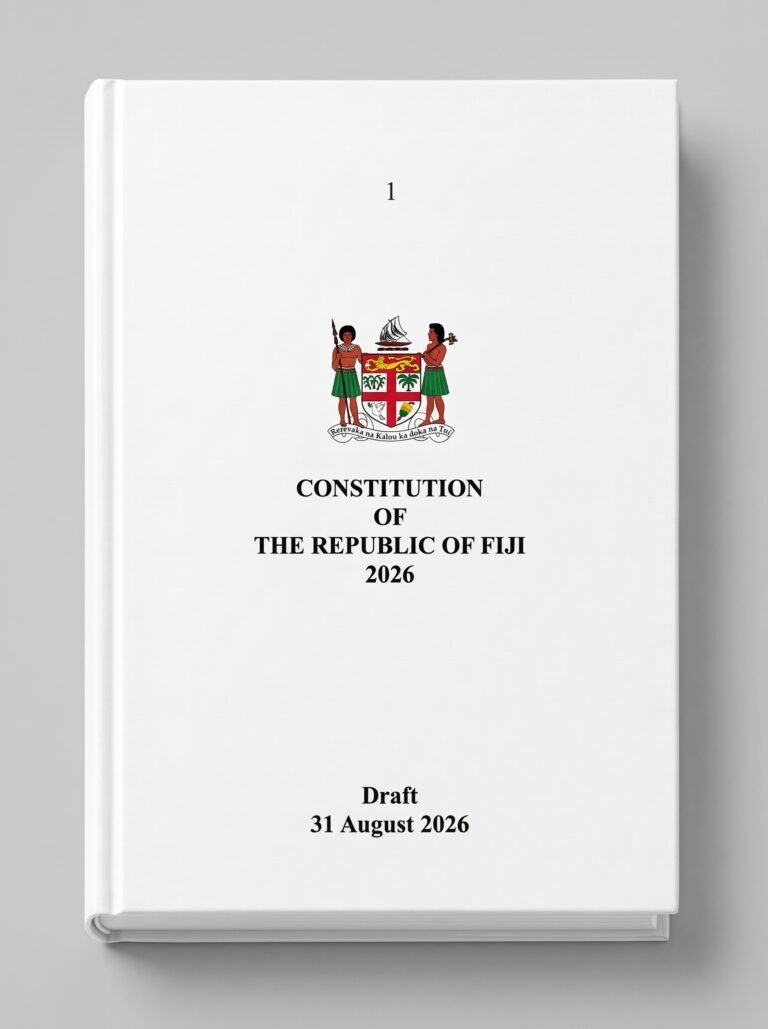
“In 2026, we now have another Constitution Review Commission which conducted consultations and produced a draft that contained many significant democratic reforms. Within weeks of the CRC submitting its draft on 31 August, the Government has produced a substantially rewritten Constitution in which some of the most consequential safeguards proposed by the CRC have been removed or diluted.
“The obvious question that will be asked is: who wrote the 2026 Fiji Government Draft Constitution, what was the basis for these fundamental changes from the CRC Draft, and how was a substantially different constitutional text produced – and in record time?”
Mr Lal said the changes could not simply be characterised as the Government implementing the CRC’s recommendations differently.
“The CRC Draft Constitution was framed around governance, rights, accountability, institutional independence and democratic legitimacy. The Fiji Government Draft Constitution has moved away from the institutional design chosen by the CRC on some of the most consequential questions of political power.”
“It may retain the CRC’s broad constitutional architecture, but it substantially dilutes many of its most important safeguards against the concentration and abuse of State power. In our preliminary assessment, that defeats much of the thinking and purpose behind the CRC Draft Constitution and leaves the proposed Constitution without many of the major improvements over the 2013 Constitution that the CRC had sought to introduce.”
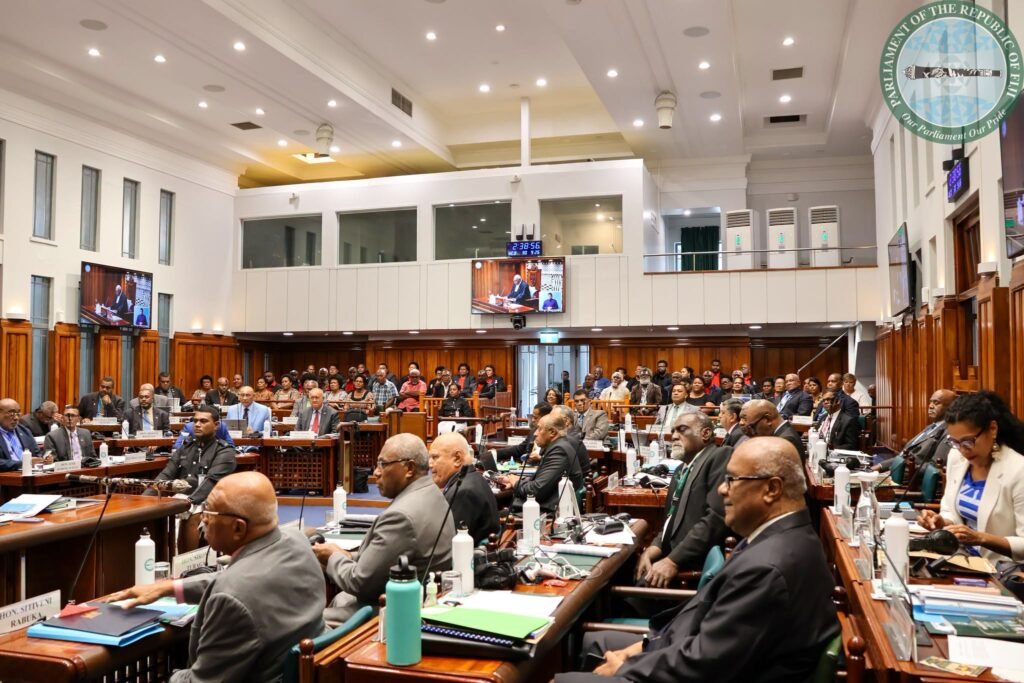
Photo Credit: Parliament of the Republic of Fiji